Natsuko
The Earthquake BirdNatsuko is Lucy Fly’s first friend in Tokyo and a colleague whose steady, practical care gives Lucy an uncommon experience of companionship. She helps Lucy find work, shares the quiet routines of daily life, and later supports her through the collapse of that life under suspicion of murder. Their friendship is neither founded on confession nor secured by constant conversation: its distinctive intimacy lies in Natsuko’s willingness to remain present without demanding that Lucy explain herself.
Identity and Work
Natsuko is about Lucy’s age, bilingual, and professionally capable. She speaks English with an accent that shifts among Australian, American, German, and Irish inflections, reflecting the many places she travelled as a child; her university studies in translation took her to New York. Her voice is therefore difficult to pin to one national or regional identity, and its changes become a recurring, lightly comic measure of mood and context. At work she tends to sound American, while energetic activities can bring out her Australian accent; on one visit to Lucy, her voice sounds Irish.
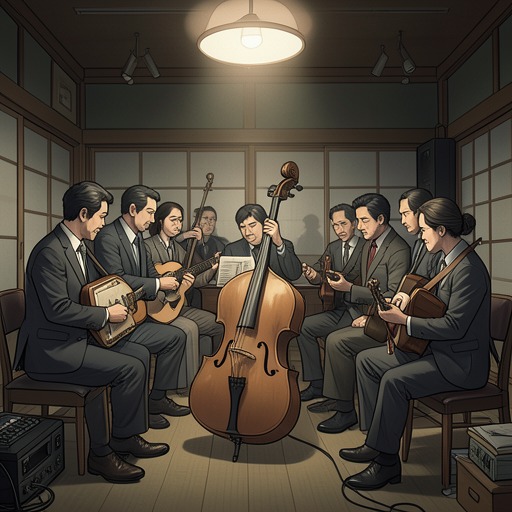
The two women’s working relationship began when Lucy first arrived in Tokyo. Natsuko later found a better job with another company and worked hard to secure Lucy a position there too. It took more than three years, but they both remained at the company. Natsuko’s assistance was concrete as well as professional: she lent Lucy pencils and dictionaries, taught her new kanji and Japanese slang, and helped her navigate a workplace in which Lucy would build a career as a Japanese-to-English translator. Natsuko also found Lucy a place in a string quartet, another part of the life she helped establish in Japan.
A Friendship Made of Routine
Natsuko is the second friend in Lucy’s life, following Lizzie, the long-faced, trombone-playing friend from school. In Tokyo, their closeness takes the form of repetition rather than dramatic disclosure. They eat lunch together every day, sharing bento meals of rice, fish, and seaweed with cans of green tea. Sometimes they talk about work or their weekends; often they have little to say, but continue sitting together because the company itself is enough.
About once a month, Natsuko and Lucy go hiking in the mountains for a day. On the descent they stop at a hot spring, remove their clothes, and let the steam ease their tired muscles. The rhythm of these outings mirrors their ordinary friendship: shared activity, comfortable silence, and a familiar return to the working week. Lucy regards Natsuko as a constant, partly because Natsuko does not press her to reveal her private life. Natsuko sometimes talks about her own unsatisfactory boyfriends and her wish to move out of her parents’ house, which she cannot afford to do, leaving Lucy room to offer something of herself in return. Lucy does not take that opening—not because she distrusts Natsuko, but because she loves the person Natsuko is and fears that talking about herself would spoil the ease between them.
Friendship in Company and Crisis
Natsuko helps draw Lucy into a wider social circle. When Lily Bridges is new to the group of English teachers, Lucy reluctantly agrees to meet her at a Shibuya izakaya, although she would rather spend her time thinking about Teiji. At a later early-morning meeting in Shinjuku before a hike, Lily has invited Bob, who brings his colleague Richard; Natsuko is among the group, busy introducing herself and beaming. Her readiness to make connections contrasts with Lucy’s guardedness and makes her a social hinge between Lucy and the people around her.
During the Yamanashi hike, Lucy slips on the descent, catches her ankle on a tree stump, and falls with the ankle folded under her thigh. Natsuko watches as Lily examines and bandages the injury, gives Lucy a painkiller and water, and helps her rest before continuing slowly. Bob and Natsuko exchange amused glances when Lucy defensively insists that she never said the injury was bad. The incident brings Lily’s nursing experience into view, but it also places Natsuko within the small circle of friends witnessing Lucy’s vulnerability. Natsuko’s presence is unshowy: she does not take over the care, yet remains part of the group that supports Lucy as she recovers enough to descend.
Strain After Lily’s Disappearance
The friendship is tested when Lily disappears and suspicion closes around Lucy. After Lucy is taken to a police station, she thinks of Natsuko as the colleague who had wanted to believe in her, but whom the newspaper headline proved unable to stand by her. Lucy feels that Natsuko has deserted her. The change is painful precisely because Natsuko had been a dependable presence; Lucy had kept her private life separate from their daily companionship, and now wonders whether that silence has left Natsuko uncertain about what she concealed.
Natsuko’s distance does not erase her earlier loyalty, and the novel lets both facts remain in tension. When Lucy calls to say she cannot come to work for several days, she is abandoning a near-deadline translation of blast-furnace maintenance instructions for a steel corporation. Natsuko is surprised because Lucy has never missed a day of work, but she does not force her to explain. She asks whether Lucy needs anything; Lucy cannot name what she needs and says no. The restraint echoes the old friendship’s respect for unspoken boundaries, though now silence also marks how difficult it has become for Lucy to ask for help.
Care and Return
Natsuko later visits Lucy with poppies chosen for their remarkable color. She says she misses Lucy at work and will call every day until she is satisfied that Lucy is all right. The gesture is practical and tender, and its effect unfolds through objects: Lucy has never bought cut flowers for herself and has never received a bouquet, so she improvises a vase from an old plastic bottle, wraps it in black paper from the kitchen bin, and opens curtains and windows that have been closed for four days. Sunlight fills the room in the same color as the flowers. Natsuko’s visit does not resolve the crisis, but it makes care tangible and helps Lucy re-enter the light of ordinary surroundings.
By the time Lucy is staying at Mrs. Katoh’s house, Natsuko and Bob are happy and friendly when they speak with her. Natsuko has taken over Lucy’s most important translations, and the clients are satisfied; Lucy can return to work when she is ready. Bob and Natsuko know that Lucy is innocent, so their friendship requires neither explanations nor apologies. They are invited to dinner, where eating and drinking together is enough for the moment. Natsuko’s arc thus turns not on a dramatic declaration but on the restoration of ordinary acts—work carried forward, a visit, a meal. Her importance lies in how those acts preserve a way back to belonging after the public story of Lucy’s guilt has disrupted the private constancy on which their friendship was built.